How to Choose the Right Front Door Colour for Your Home
A well-chosen front door colour can improve the appearance of the whole frontage
Choosing a front door colour is not only a matter of personal taste.
The right shade should suit the style of the property, work with the surrounding materials, and still look appropriate years from now.
A front door is one of the first features people notice, so colour choice can have a clear effect on the overall appearance of a home.
Start with the style of the property
The design and age of the property should usually guide the choice.
Traditional homes often suit classic and understated colours such as black, white, grey, navy, dark green, or deep red.
More modern properties can often carry stronger contrasts or cleaner contemporary shades, including anthracite grey, muted blue, or bold black.
A colour that looks attractive in isolation may not always suit the character of the house.
In most cases, the best result comes from choosing a shade that feels in keeping with the property rather than following short-term trends.
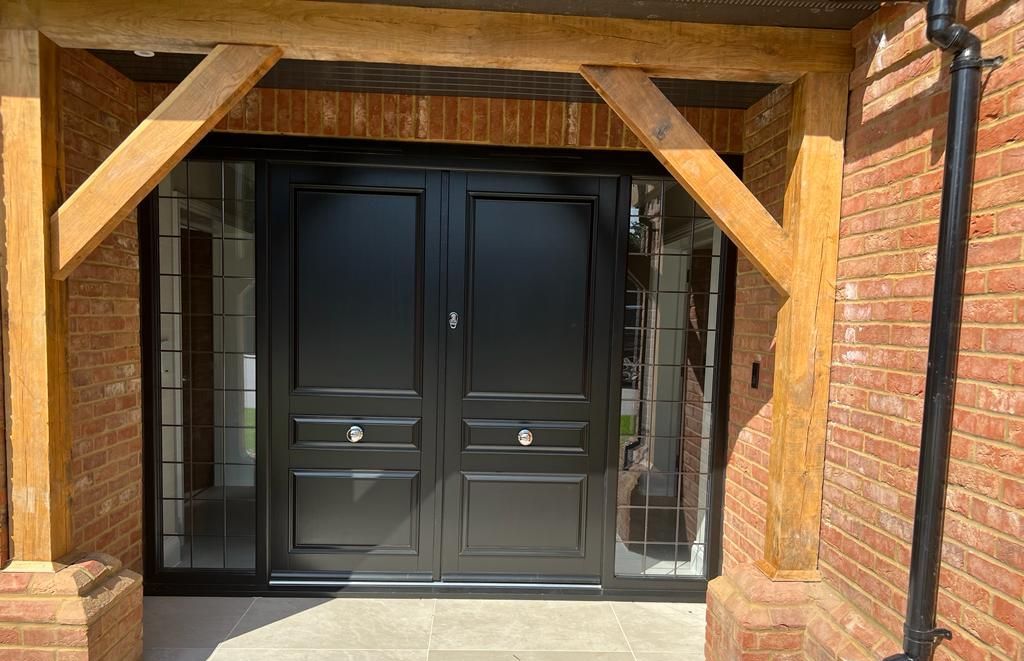
Consider the brickwork, render, and roofline
The front door should work with the fixed colours already present on the outside of the home.
Brick tone, render colour, roof tiles, and any cladding all affect which shades will look balanced.
For example:
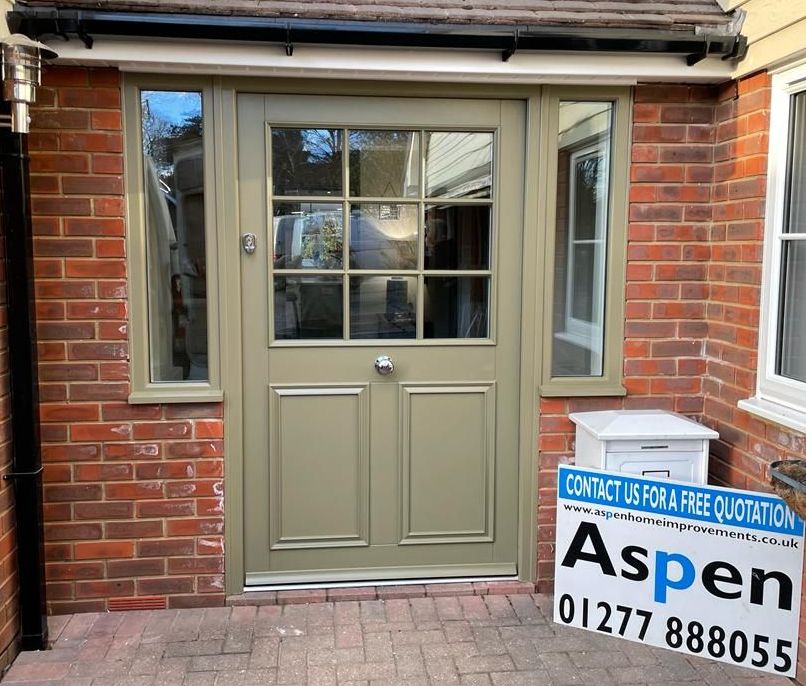
- Red brick often works well with black, white, dark blue, green, and some shades of grey
- Light render can suit both soft neutral colours and darker statement shades
- Stone or mixed-tone exteriors often benefit from more muted, natural colours
If the external materials already create a busy appearance, a simpler and more restrained door colour is often the better option.
Think about the window frames and other exterior details
The front door should not be considered on its own.
Window frames, porch details, garage doors, fascias, and guttering all contribute to the final look.
Where window frames are white, black, or grey, it is usually easier to create a coordinated appearance.
If the frames are a woodgrain finish or another specific tone, the door colour should be selected carefully so that the overall frontage does not appear mismatched.
A consistent exterior colour scheme often gives a property a more considered and higher-quality appearance.

Decide whether the door should blend in or stand out
There is no single rule on whether a front door should be subtle or make a statement.
The right choice depends on the property and the effect the homeowner wants to achieve.
A door that blends in can create a neat, balanced, and timeless appearance.
This approach often suits traditional homes, terraces, and properties where a more understated finish is preferred.
A statement colour can work well where the frontage is simple and the homeowner wants to add character.
Strong colours such as deep blue, green, burgundy, or certain muted contemporary shades can add interest without appearing excessive.
In general, bold colours tend to work best when the rest of the exterior is relatively simple.
Be cautious with personal preference alone
Choosing a favourite colour is understandable, but it should not be the only factor.
A colour that works well indoors, in clothing, or in small accessories may not always suit the outside of a house.
The front door should be viewed as part of the overall property rather than as a separate feature.
A practical choice usually considers appearance, surroundings, and long-term suitability as well as personal taste.
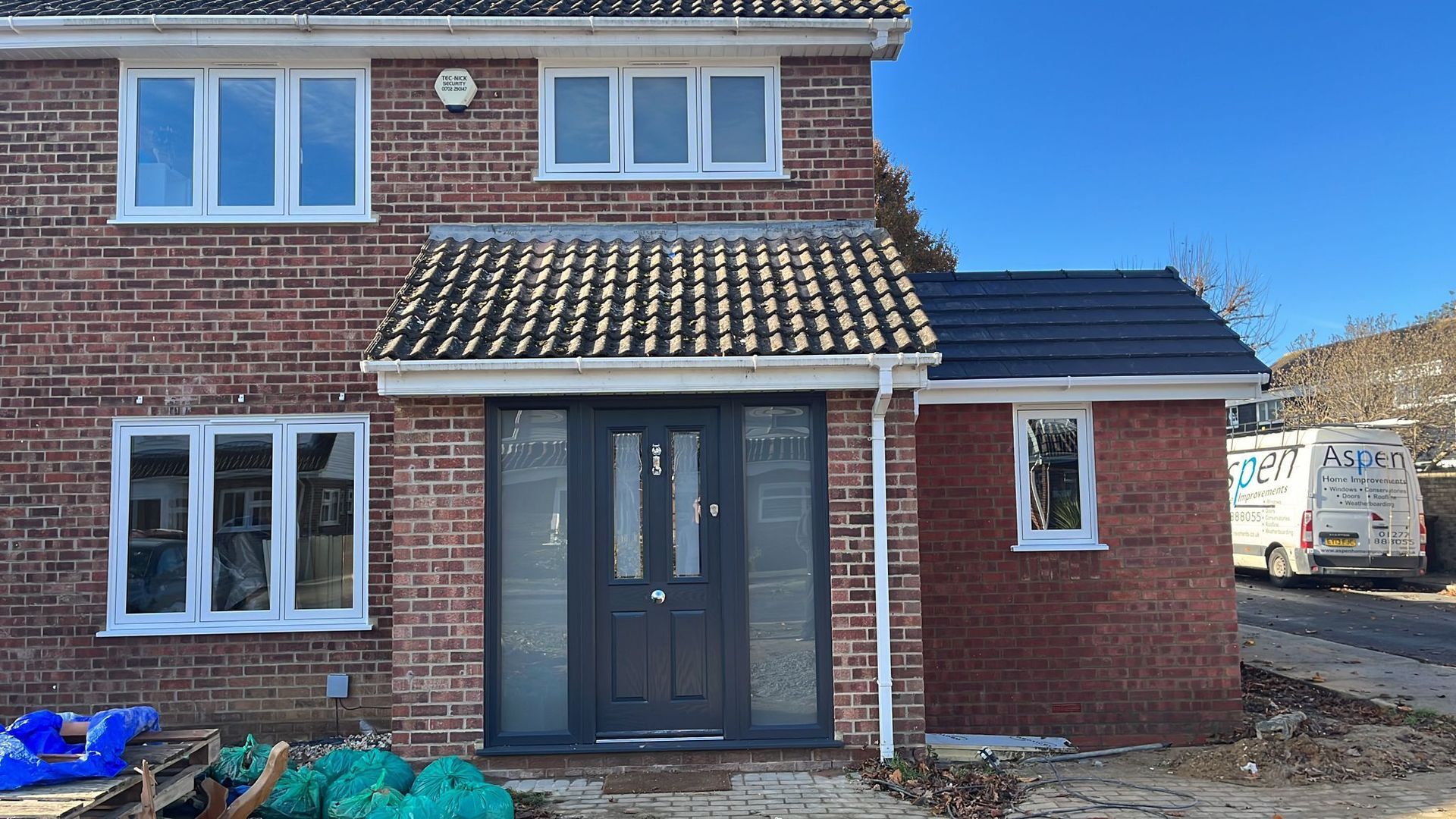
Consider how the colour will look in different light
External colours can appear very different depending on the weather, season, and time of day.
A shade that looks right in a brochure or on a screen may appear lighter, darker, brighter, or flatter once fitted.
For that reason, it is sensible to view samples in natural daylight wherever possible.
Looking at a colour outside, against the brickwork or render of the property, gives a more accurate idea of the final result.
Think long term rather than following trends
Front doors are not replaced frequently, so colour choice should be made with some longevity in mind.
Neutral and classic shades often remain appealing for longer and are less likely to date quickly.
That does not mean bold colours should be avoided. It simply means they should be chosen carefully.
A strong colour can work very well when it suits the property, but a trend-led choice may feel less appropriate over time.
A practical approach usually gives the best result
In most cases, the best front door colour is one that:
- suits the style and age of the property
- works with the brickwork, render, and roofline
- complements the window frames and other exterior details
- reflects whether a subtle or more distinctive look is preferred
- still feels appropriate in the long term
A well-chosen front door colour can improve the appearance of the whole frontage.
The most successful choices are usually based on the property itself rather than on fashion or personal preference alone.
We do hope you found this article of interest, if you do have a query regarding this article or any of our other articles, then please get in touch with us.